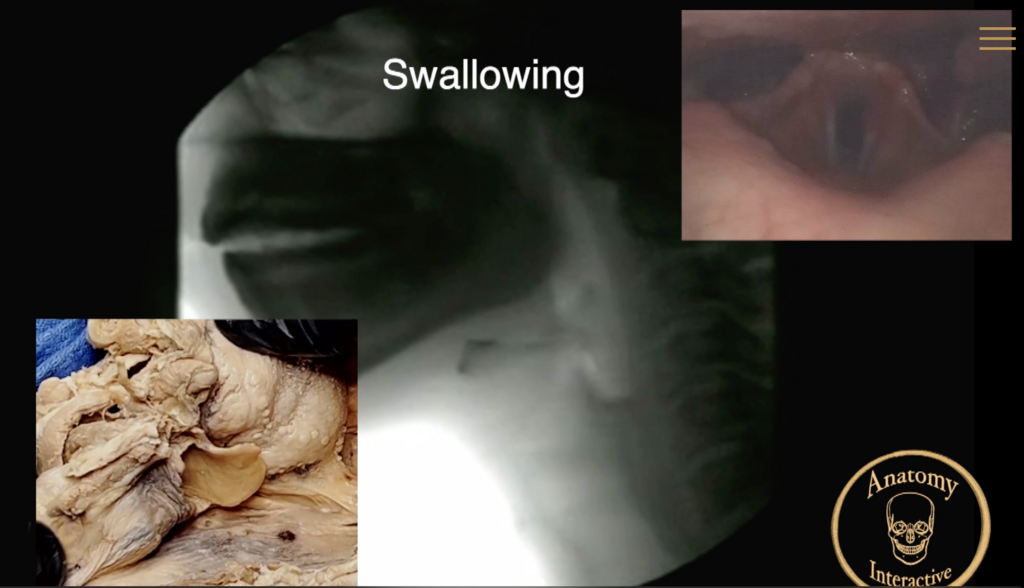
Laryngeal Anatomy

Learn the anatomy of the larynx by working through this reasoning module based on the action of swallowing. With in-situ dissections, fluoroscopy, and endoscopic videos, the names and actions of the intrinsic and extrinsic muscles of the larynx can make a lot more sense.
Understanding the H-test & cranial nerve palsies. 


During the H-test, a patient has the most notable double vision while trying to look to the right and down. If this is due to an isolated nerve disorder, which of the following muscles is most likely not functioning normally? 


1. left lateral rectus

2. right medial rectus

3. right superior oblique

4. left superior oblique

5. right inferior oblique

6. left inferior oblique

Unequal pupils autonomic imbalance

anisocoria

One of the first things every healthcare provider does when examining a patient is look into their eyes (at least we should hope so). While there are local causes of unequal pupils in the structure of the eye itself, anisocoria can be a critical red flag that helps us pick up life-threatening processes in time to avert disaster. Practice working through the reasoning to be able to quickly ascertain the cause.


UNDER CONSTRUCTION

COMING SOON!

Parasympathetics

The parasympathetic system of the head and neck is a challenging subject for many medical students. Using in-situ dissections and alternate reasoning pathways, this module can help students work their way through complex diagnostic questions to gain a thorough understanding of cranial nerves and parasympathetic ganglia that is more apt to stay with them beyond their first-year anatomy course.

UNDER CONSTRUCTION: COMING SOON!

 
Slo Mo One-handed Knot Tying Left Hand
Slo Mo One-handed Knot Tying Right Hand